A vine romance with chardonnay(1)


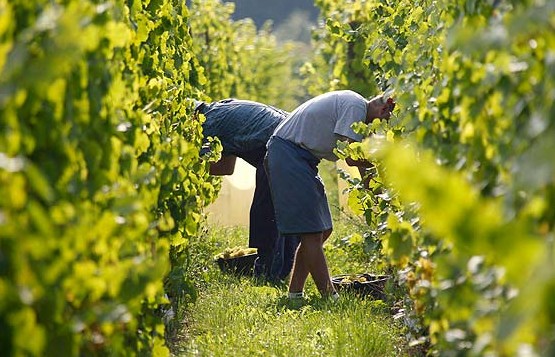
ABUNDANT: Overseas chardonnay had become ubiquitous, a hardy grape able to be grown in most climates.
Wine snobs and doubters, listen up – chardonnay is getting its mojo back.
Sure, it's not about to overtake our industry darling, sauvignon blanc, any time soon, but it is increasingly finding favour as a sophisticated and elegant alternative, capable of holding its own in the finest company.
You only have to look at the wine awards to see how chardonnay is winning attention.
For example, at the prestigious Air New Zealand Wine Awards in mid-November, Villa Maria won Champion Wine of Show for a chardonnay, its single vineyard Keltern 2010.
It took the same top award once before, in 1987, with a Gisborne chardonnay.
Chardonnay's fall from grace in New Zealand began in the 1980s, although it is still the most popular white wine grape globally, in part because it is the grape used to make Champagne. Overseas, it has become ubiquitous, a hardy grape able to be grown in most climates.
Some New Zealand chardonnays, however, tried to mimic French styles, where chardonnay is known variously as white burgundy, chablis and macon.
These distinctive appellations – legally protected names used in France, which identifys specific wine production regions – were often so badly reproduced that many wine drinkers turned away.
They were too oak, too buttery. Some winemakers even added wood chips to try to emulate the effect of the French oak barrel.
THE REPLACEMENT
Kiwis turned instead to to the new kid on the block, sauvignon blanc, introduced to New Zealand by Matua Road founder Ross Spence in 1974.
He had been studying oenology and viticulture in California, and on his return to New Zealand experimented with some of the varieties he had enjoyed there.
Sauvignon blanc proved a hit on his Matua vineyard, north of Auckland.
It then became popular with other growers. Montana (now Brancott Estate) was the first to plant and make sauvignon blanc in Marlborough, after taking some cuttings from Spence.
It is our sauvignon blanc, rather than our chardonnay, which has proved most popular internationally.
Eight of every 10 bottles sold offshore today are sauvignon blanc.
The latest figures show exports of chardonnay, merlot and pinot gris were down, but industry body New Zealand Wines (NZW) says this is more because of a smaller 2010 harvest rather than lack of demand. The 2011 chardonnay vintage accounted for 8 per cent of the country's varietal mix, down from 10 per cent in 2010.
With fewer grapes from the North Island and more from the Mainland, NZW says it is no surprise sauvignon blanc accounted for 69 per cent of the varietal mix from this vintage, up from 66 per cent.
It does note with some consternation, though, that the long-term implications of us depending on a single variety "must be taken into account when considering the sector's future direction".
"In target markets such as China and Europe, there have been impressive numbers for styles such as chardonnay and full-bodied reds," NZW chairman Stuart Smith says in the 2011 annual report.
DIE-HARDS
Not all winegrowers have given up on chardonnay. One of the early proponents and still a keen fan is Kumeu River, which produces a Burgundy-influenced style of chardonnay that features indigenous yeasts, extended lees ageing (leaving the wine with the sediment) and malolactic fermentation, which gives the buttery notes.
Winemaker Michael Brajkovich says chardonnay's comeback was almost inevitable.
"It has had a resurgence in interest, not because it's any better than it used to be, but because things do go in terms of fashion and chardonnay has always been, I think, the very best variety for dry white wine."
Kumeu River has just won stunning reviews in the United States wine publication, Robert Parker's The Wine Advocate.
Asia correspondent Lisa Perrotti-Brown reviewed 892 Kiwi wines and Kumeu River's Mate's Vineyard Chardonnay 2009 was the highest-ranked white wine and was placed third overall. The 2009 Kumeu River Hunting Hill Chardonnay was fourth equal. They were the only two whites among the seven best scoring wines.
The winery stopped producing sauvignon blanc because it felt there was "too much around", focusing instead on chardonnay which grows well in its area.
However, Brajkovich accepts some winemakers did get it wrong with chardonnay. Some New World wine producers believed that if a little bit of oak, as in the true Burgundy style, was a good thing, then a lot of oak must be really good.
