Chinese investors turn to liquor, art, aphrodisiacs as markets dry up(1)


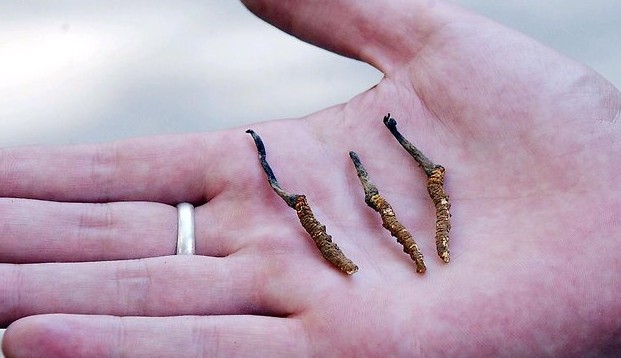
Fungus harvested from dead caterpillars, known as Himalayan Viagra, is the new draw for Chinese investors. Picture: AFP Source: AFP
FOR generations, Chinese men looking for a dose of vigour have sworn by a traditional remedy: fungus harvested from dead caterpillars, known in some quarters these days as Himalayan Viagra.
Now Chinese investors are using the rare fungus to try to boost something else - their investment returns. The fungus has doubled in price over the past two years and the top grade now fetches more than $US11,500 ($10,789) a pound, according to Fuzhou-based brokerage firm Industrial Securities.
With Chinese stocks falling, real-estate markets flat and bank deposits offering measly returns, Chinese investors have been looking for help in strange places.
Besides traditional medicinal products, they are plowing money into art-based stockmarkets, homegrown liquors, mahogany furniture and jade, among other decidedly non-Western asset classes.
"On a micro level, speculation has appeared," says Long Xingchao, president of the information centre of the China Association of Traditional Chinese Medicine. The association says prices of traditional medicines, including red ginseng and false starwort, have surged since 2010, partly because of speculators.
Mr Long insists, however, that a price bubble isn't forming. "There's nothing to pop," he says.
Newfangled exchanges are sprouting across China to take advantage of the excitement. Nanjing Pharmaceutical Co set up an exchange in 2011 for trading traditional medicines such as deer antler. In November that year, it extended hours so investors could trade when they get home from work. "Expanding the hours gives investors more time to make a profit," the exchange said on its website.
Exchanges have popped up that allow investors to buy and sell shares of individual works of art. In the city of Tianjin during the last Chinese summer, an unnamed seller floated about 30 million shares of a painting called Eternal Lotus Wind, at an initial price of 1.61 yuan (23 cents) apiece. Within two days, investors had bid the shares up 52 per cent, valuing the painting at about $US11.5 million. Then the shares began sliding; they now trade at 36 per cent below the initial offering price.
Cui Ruzhuo, who painted Eternal Lotus Wind but didn't profit from the offering, says the art market still has legs. "We still haven't arrived at the high point," he says.
Investors are taking to drink, as well. Maotai - the most popular variant of a homegrown liquor called baijiu, and once a favourite of Mao Zedong - now sells for more than $US300 a bottle, double the price a year ago.
"In the past, baijiu was only for consumption," says Liu Xiaowei, chairman of auction house Beijing Googut Auction Co, which held a baijiu action last month. "But now it's also a collectors' item and for investment."
