Markets-wet, wild and wriggling(1)


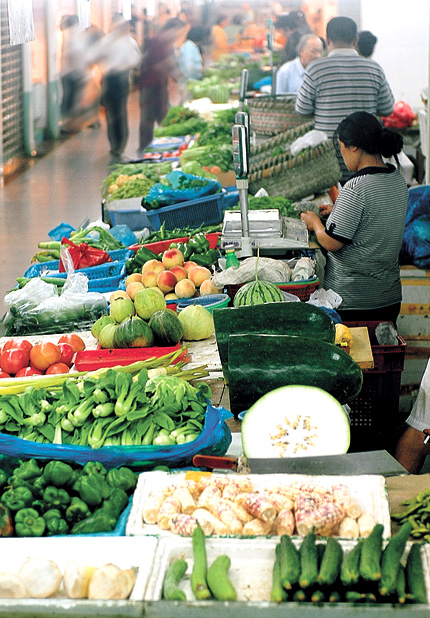
TOP chefs source the freshest ingredients from wet markets selling everything from greens and vegetables to a virtual menagerie that crawls, scampers, flies, swims, trots or otherwise gets around. Gao Ceng goes for a stroll with Chef Sam.
Grimy wet markets, piled high with fresh, wet and wiggling produce - things that swim and crawl, snap and scuttle, sometimes jump, flop and hiss, sometimes squeal, quack and flutter - are sublime pilgrimage sites for gastronomes.
Forget the smells, the slippery floors, the blooded chopping blocks, the red gutters, the sounds of cleavers smashing into bone and flesh, the piles of discarded fish guts, feathers and other innards.
Forget the crowds of shoving shoppers and vendors jammed together, shouting and bargaining. Make way for the new trolleys of fresh fish or crustaceans, or tiny wild birds desperate to escape from their baskets.
Ah, drink it all in - the sights, sounds, the smell, the touch, the taste - and imagine that out of all this commotion will come magnificent feasts.
Renowned chefs such as Alain Ducasse, among many others, make it their business to check out fresh wet markets for their restaurants to ensure their produce is the freshest and most seasonal and interesting. Visits are adventures not to be missed and many an expat gets hooked, so to speak.
Shanghai has three main types of food market - indoor markets managed by the government, unlicensed wet markets and wholesale markets.
Indoor markets, open from 6am to 6pm, generally cover 1,000 square meters in the center of a residential area. It's clean and well organized; many vendors provide abundant produce, attractively displaced. Shopping is a comfortable experience. Most products come from wholesale markets so the quality and supply is steady and uniform, which prices are relatively higher.
Wet markets, also called roadside markets, are known for being crowded and often dirty; the food is very fresh and the prices are cheaper. They are often criticized for occupying public space and slowing down traffic.
Every morning around 4am, fruit, vegetable, fish, meat and other hawkers start selling their products from tricycles on the road, generally lining the main street. From 7am to 8am, streets are flooded with customers, mainly people in the neighborhood. Markets close at around 10am.
These roadside markets charge no rental fees and attract many suburban farmer selling fresh-picked greens and vegetables. Poultry is taken to market alive and slaughtered (illegally) on the spot. But for many Chinese who consider freshness the No. 1 issue, wet markets are still their first choice.
Downtown, there are two popular wet markets, one on Zhejiang Road M., the other on Xiangyang Road N.
Two large wholesale markets near the suburbs sell high-quality food at competitive prices, 20 percent cheaper than the average in most markets. One is Cao'an Wholesale Market on Wuning Road in Putuo District, selling all kinds of greens and produce as well as meat, poultry and fish. The other is Tongchuan Road Seafood Market, also in Putuo District.
Market culture
Some Shanghai housewives willingly make the trip.
"I go there (Cao'an Wholesale Market) once a week and usually buy lots of vegetables and dried food that last for a long time - both for my family and neighbors who cover my transport fee," says Zhang Xiaopei, a middle-aged shopper.
Shoppers at Tongchuan Seafood Market not only buy seafood but also enjoy meals since dozens of nearby restaurants feature seafood. Diners can order from the menu or ask the chef to prepare seafood they have already purchased.
