China's small exporters must adapt or die(2)


.
Reuters Insider video from Ningbo:
^^^^^^^^^^^^^^^^^^^^^^^^^^^^^^^^^^^^^^^^^^^^^^^^^^^^^^^^^>
Ningbo thrived under the old growth model, powered by labor-intensive exports of goods assembled by China's seemingly endless supply of low-skilled, low-paid workers. But the city has been investing heavily to build a high-tech zone.
In the city centre, away from the industrial belt, shopping centres packed with affluent consumers hungry for fashion brands provide a glimpse of what Beijing hopes will come next: a consumer-driven economy.
A Raffles City mall is due to open this year in Ningbo, a city of 6 million, plus another 4 million migrant workers, which sits about 250 km (150 miles) south of Shanghai. A "wine street" selling 2,000 types of wine imported from more than 20 countries debuted last June.
MARGIN SQUEEZE
Premier Wen Jiabao last month staked his political legacy on the need for structural reforms to wean China off its reliance on low-end exports and drive manufacturers up the global value chain.
Li Keqiang, widely expected to succeed Wen early next year, told a forum last month that China cannot delay reforms to rebalance its economy.
Boosting wages is part of the equation, and China's latest five-year economic plan calls for an average annual increase of 15 percent. But that can push small businesses to the brink.
New export orders for Chen's business have fallen 30 to 40 percent so far this year from a year earlier. Average monthly wages for workers, on the other hand, have climbed 10 to 20 percent, on top of last year's 40 to 50 percent surge.
In addition to the 3,000 yuan ($480) monthly salary, the privately run firm has to contribute another 250 yuan to each worker's social security funds - medical care and pensions - and provide accommodation for its 130 workers, Chen added.
That leaves little money for the firm to automate production lines, let alone develop brands to rival the likes of "Shanshan" and "Youngor" - leading national brands that are symbols of Ningbo's thriving clothing industry.
MOVING UP THE LADDER
Countries such as Vietnam, Cambodia and Bangladesh have begun undercutting the China price on labor-intensive goods such as clothing, which means that moving up the value chain is essential to survival.
Official data this week showed textile exports grew by just 1.4 percent year on year in the first quarter, versus overall export growth of 7.6 percent. Exports of higher value-added machinery and electronic products grew twice as fast.
You Zhongguang, vice manager of Ningbo Xingwei Plastic Products Co., one of China's biggest exporters of cutters and knives, forecast sales of 180 million yuan ($28.5 million) this year, up from 163 million yuan in 2011, but sees rising wages as his biggest challenge.
"The scope for making profits gets smaller and smaller, our gross profit margin is only 10 percent. Considering the rise in wages and raw materials, the margin is very small," he said.
To boost productivity, the company plans to spend as much as 5 million yuan this year to automate production lines, he said.
GO WEST
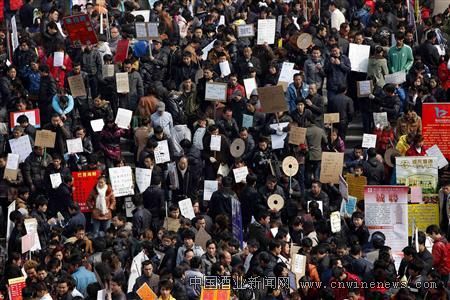
What has been driving up wages is persistent labor shortages in China's export hubs. Even with Chen's neighbors closing shop, signs looking for workers are still everywhere.
The shortfall of migrant workers in Shaoxing, a smaller city in Zhejiang, is around 150,000 and the gap in the southern province of Guangdong is estimated at 800,000 to 1 million, according to a report by the official Outlook Weekly magazine.
That's a stark contrast to what happened after the collapse of Lehman Brothers in 2008, when a slump in global demand threw about 20 million migrant workers out of jobs.
State media have reported that 21 Chinese provinces, autonomous regions and municipalities raised minimum monthly wages by nearly 22 percent last year.
The number of Chinese workers aged 15 to 24 will likely fall by a third in the next 12 years, according to Beijing-based consultancy Dragonomics, giving even more bargaining power to the next young blue-collar generation.
The labor drought has fanned a debate among academics about whether the country is near or crossing the Lewis turning point, a theory that wages in a developing nation start surging once there is a shortage in surplus rural labor.
Just over 51 percent of the 1.35 billion mainland Chinese lived in towns and cities at the end of 2011, the government has said, crossing the halfway mark after three decades of rapid growth in the world's most populous nation.
More than a decade after the government launched its "Go West" campaign to promote investment and development in the poor, rural Chinese migrant workers can increasingly find work near their home villages, beating the cost of living in coastal cities where China's factories are concentrated.
"It's easy to find a job in my home town now," Sun Tiantian, a 19-year-old from Henan who has worked at Chen's factory for three years and only returned after the Lunar New Year, a prime time to switch jobs, because her sister works there too.
That structural shift has started to even out income distribution among China's mainly low paid migrant workers, reducing a potential flashpoint for social unrest.

