Exquisite Harmonies: Matching Iberian Wines with China’s Great Cuisines(1)


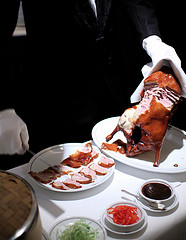
Not a great deal has been written on what is admittedly the relatively new area of pairing international wines with Chinese cuisine. Or should that be Chinese cuisines? This vast country, now in the grips of the Olympics at last, boasts an incredible array of provincial and regional dishes, embracing just about every cooking technique under the sun � many of which, of course, were either �invented� or developed in China itself.
So, if you want to explore Chinese cooking and try your hand at matching your favorite wines with different dishes, how can you get started? And what dishes might partner well with Iberian wines, an equally diverse world of flavors and textures?
China�s rich culinary heritage is hugely complex. But, put simply, four overall groups dominate: Lu (Shandong), Yue (Cantonese), Chuan (Sichuan) and Huaiyang (Jiangsu). What wines match with these groups? Given the innate diversity of these cuisines, Chinese gourmets will find this question bizarre: a bit like saying, �What wines can pair with French, Spanish, Norwegian or Austrian food�? The answers can seem endless, but we have to start somewhere.
Below are some specific examples from each school of cooking matched with one or more Spanish or Portuguese wines. There are certainly enough wine-styles and types of wine-making in the Iberian Peninsula to offer some great matches with Chinese dishes from different traditions.
And, if some of these cuisines are not all that available outside China, the great Cantonese Diaspora has at least meant that what passes for Chinese food in other countries is essentially Cantonese in origin or influence. Fortunately, Cantonese cooking is also among the most wine-friendly of China�s great cuisines.
Lu (Shandong)
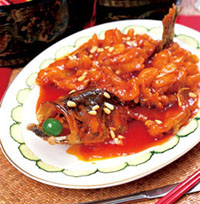
Shandong food is well-known for its purity of flavor and considerable use of fish � the coastal cities of Yantai and Qingdao boasting superb sources of seafood and river fish alike. This relatively rich cuisine combines various techniques, but stir-frying, deep-frying and braising are common. One Shandong classic is �sweet and sour� Mandarin fish which pairs well with oaked rich whites such as high-quality white Rioja at Crianza or Reserva levels. White Rioja, when well-made, yields oxidized citrus fruit, but is not too fruit-driven (which would interfere with the �fruity� quality of the sauce here) whilst the oak lends a savory contrast. White Rioja is also not particularly acidic and is relatively full-bodied. A light-bodied, high acid wine would ruin the balance between acidity and sweetness in this dish.
