Just for eating and drinking(1)


China is famous for her delicate dishes. For Chinese, eating and drinking are not just a matter of vegetables and seasoning. They are a part of culture, which is reflected by the containers. Chinese food and drink sets have a long history and come in a wide array of shapes and sizes. Materials involved include pottery, bronze, porcelain, jade, glass wine sets and those made with other materials.
Archeological finds dating from as early as the Neolithic Period show that pottery had already been brought into use then and consequently drinking vessels were produced in a variety of forms from simple to those with handles and elaborate shapes. Usually, the higher the quality, the more dignified or important the owner.
Yanhou Yu
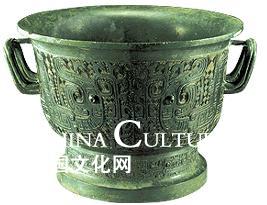
In 1955, 16 bronze vessels were excavated at Machanggou village in Liaoning Province in 1955. One of them is called Yanhou Yu, and is 24 centimeters tall and 34 centimeters wide. Yu is a bowl-shaped vessel with handles from the late Shang to Spring and Autumn period (770 – 476 BC) and was intended to contain food or water.
Yanhou Yu was made during the Western Zhou Dynasty. Its body was decorated with the figure of a phoenix, which showed the high status of the owner. It is boasted as one of the top ten bronze vessels.
Bowls 3000 year’s ago in much bigger than we use now, but there is an even larger one 800 years ago.
Dushan Dayu Hai (Extra large jade bowl of Dushan)
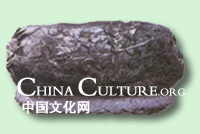
The "Dushan Dayu Hai" during the Yuan Dynasty is the biggest jade work from ancient China. It is a large black jade urn that weighs 3,500 kilograms (7,716 pounds) and can hold 1,800 kilograms (3,968 pounds). On its exterior there are powerful engravings of living dragons and beasts emerging from waves. It is said that this urn was transported in 1256 by the Yuan Dynasty's first emperor to reward heroes at a great feast.
Dushan Dayu Hai was made of a 5 tone jade stone, and held 3,000 liters of alcohol. Now this drinking vessel is bestowed at Beijing’s Beihai Park.
