Languedoc - France's lab for a new wine wave(1)


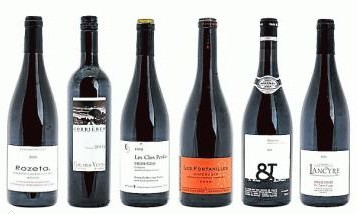
From left: 2009 Maxime Magnon Rozeta Corbieres, 2009 Castelmaure Col des Vents Corbieres, 2009 Les Clos Perdus Prioundo Corbieres, 2009 Anne Gros/Jean-Paul Tollot Les Fontanilles Minervois, 2008 Hecht & Bannier Minervois, 2009 Chateau de Lancyre Vieilles Vignes Pic St. Loup
Languedoc-Roussillon has become France's bane and its great hope.
Bane because this massive southern region, with 740,000 acres in vine, or half again as much as all California, has long been a wine lake - a source for oceans of industrial wine to slake thirst in Europe and the Americas alike.
But let's focus on the hope. For two decades, it has also enjoyed a renaissance as a region that blends Old World tradition and New World freedom. Here is the one place in France where rules are still being written. It seemingly wants to say you can have it both ways: You can have big fruit in your wine, and you can have it without sacrificing the signature of place.
Yet its revolutionary phase has matured. Houses like Mas Champart and Daumas Gassac have made their names here. So what's the state of the art?
It's no surprise that in our recent tasting of more than 40 reds from Languedoc and Roussillon, a similar tale kept resurfacing - of the young and enterprising vintner who inherits or uncovers a trove of old, disregarded vines and farms them back to health. It's also no surprise that many wines we liked best benefited from organic or biodynamic practices.
Bringing distinction
The roster includes people like Didier Barral, or Gerard Gauby of the Roussillon's Domaine Gauby, who fought the temptation to get government cash to pull out treasured old roots. It also encompasses ambitious co-ops like the one in Castelmaure, which seeks to bring distinction to the huge Corbieres appellation.
That said, Languedoc-Roussillon's hugeness has created some obvious problems of place. Take Corbieres; as France's fourth biggest appellation, this blob spreads across the hills west of the Mediterranean coast at Narbonne.
Hence Corbieres on a label can mean nothing at all. But it can also represent distinction, as with a determined vintner like Burgundy native Maxime Magnon, who brought a keen talent to great old vines that thrive in the tough limestone and schist soils.
The Carignan grape is Magnon's raw material, as it is for many enterprising vintners in the region. The irony is that Carignan has also been Languedoc-Roussillon's most unloved child. Its neutral character when poorly grown accounted for much of the boring wine that debased the region's reputation.
Now, it's being revived by people like Jean-Marie Rimbert, who struggled to buy land in the obscure area of Saint-Chinian. He's determined to pursue greatness in vineyards on the area's stark, schist-rich plateaus.
Same with Anne Gros and Jean-Paul Tollot, a couple well known in Burgundy who looked south to find great, rough limestone soils in the large Minervois region and a different base material than familiar Pinot Noir. Their work shows the grape's ability to show terroir without sacrificing deep fruit.
To the far south sits Roussillon, bordering Spain and as much Catalan as French in demeanor. While this is sweet wine territory, home to great Rivesaltes and Banyuls, Roussillon's dry reds increasingly tell their own story of stark, remarkable terroir.
Lessons to learn
Upstarts like Clot de l'Oum have joined domaines like Gauby, and the near-moonscape of Maury has drawn American winemakers like Dave Phinney (The Prisoner) and Abe Schoener (Scholium Project).
The obvious takeaway is that Languedoc-Roussillon has succeeded in its goal of being a laboratory for France's new wine wave. Not without casualties, of course - the usual examples drowning in obvious oak, working too hard to shed their roots.
But there's also a greater lesson that should resonate in California. Languedoc-Roussillon's back-to-the-future ethos, its new respect for grapes fallen into disrepute and the creation of an artisan culture in a bed of industrial wine, make for a savvy model.
When we hear of the resurrection of old vines, of forgotten places with deep potential, we should know it's a story that we increasingly have in common.
