These last Chinese chefs(1)


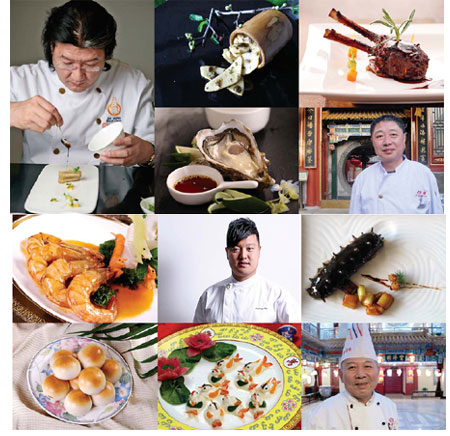
They cooked for kings and scholars. Lauded in prose and poetry, they created an epicurean culture exalted as one of the greatest in the world. Now China's guardians of cuisine are having to move with the times, like everyone else in a country catching up with the rest of the world at warp speed. Ye Jun finds out how they are coping.
Ten years ago, Dong Keping would have eaten a platter of braised and fried intestines without hesitation. The "nine-twist" pork chitterlings are a famous Shandong specialty that is deliciously rich, aromatic and crisp. But Dong, a Beijing gourmet and editor of a popular food program on radio, now thinks twice before ordering, his eye firmly on his medical reports. Many Chinese dishes that were once popular are declining or disappearing, as a rapidly evolving society changes its eating habits, in response to changing times.
New regional influences and creative fusion marrying diverse ingredients and cooking methods have also injected new life into the country's culinary traditions.
Sometimes, it is fading memory that sounds the death knell. In the varied options available to the modern diner, the old-time favorites are all but forgotten. Take furong jipian, a silky but firm custard of finely minced chicken breast and egg that is so well made that you cannot tell there is meat in it. It is a classic example of the elaborate artifice used in imperial cuisine - chicken and egg masquerading as tofu.
"Very few people order the dish now," says executive chef Yin Zhenjiang at Fengze Yuan, a Shandong restaurant established in Beijing in 1930. His venerable establishment is recognized as the most representative of the Shandong school of cooking, credited with influencing the Imperial cuisine of the capital.
Chinese gourmets are increasingly aware of health issues and more and more are opting for healthy, green and environmentally friendly food. Chefs have to learn how to cook with less oil, less salt and no monosodium glutamate.
Restaurants now rarely serve game, at least openly, and traditional banquet specialties such as sharks fin and abalone are being replaced by more acceptable, less endangered options. Organic vegetables, sustainable seafood and free-range poultry are widely available, widely used and widely advertised.
In these last 30 years, Chinese eating habits have undergone many changes.
Before the economic reforms that started in the early 80s, people were more concerned with simply filling their stomachs. At most, there were feasts on occasions such as the Spring Festival.
"In the early years of economic reforms, many types of food were rationed," recalls Li Shuangjin, executive chef with Fang Shan in Beijing, a restaurant started in 1925 by former chefs from the imperial kitchens.
"When more foreigners started to visit China, they boosted the development of Chinese restaurants," he says.
"Beijing chefs also went abroad and to other parts of China. By the 1990s, the restaurant industry had grown to a noticeable scale."
The late 80s and early 90s also saw the rise of regional cuisines in the capital. Cantonese and Sichuan chefs made their presence felt and Cantonese restaurants such as Mingzhu Seafood Restaurant and Hong Kong Gourmet City became phenomenally popular.
Apart from the different palate of flavors, people were stunned by the cost of an average meal there - which could be several hundred to more than a thousand yuan. It was the equivalent of an average month's salary for many.
"The Cantonese restaurants represented the high-end dining market, while the Sichuan eateries catered to the populace," says Dong Keping, who produces the food program at 87.6 FM Beijing.
After the initial shock, many Chinese chefs from all branches of regional cooking adopted "foreign" ingredients, seasoning and even Western presentation with great enthusiasm and innovation.
Wagyu beef and cod, never heard of before, are now standard on many Chinese menus, including those of the four cornerstone cuisines of Chinese cooking - Shandong, Cantonese, Sichuan and Huaiyang.
