The End of an Era – China Buying Out French Vintners(1)


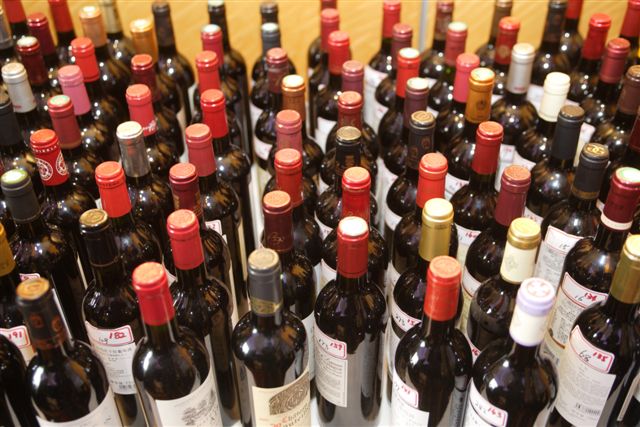
“Its all about deception,” the man Jiang, seated at my left, tells me. “The Chinese are buying those french vintners in order to make a buck, but also to confuse folks,” he says through an interpreter.
The only one who is confused is me.
I’m at an upscale Beijing eatery where a meal for ten can run thousands of US dollars. Surrounding me are local businessmen and communist party members, so the question of cost is of no consequence.
Per the custom of such events in China, only the finest of alcohol is flowing. Jiang, whom I have known for years, samples one of the 1000RMB bottles of Maotai on the table before us.
Smiling in that naïve way he has, he nods and says , “This bottle, it’s a fake. There are many ways to tell, but don’t concern yourself with them. The truth is that 80% of all Maotai in China goes to the party members or the military. This is not a communist party event, so you can assume it is fake.”
And he should know. Mr. Jiang, is a slight but charming communist party member who subsidizes his retirement income by selling Maotai, both real and pirated. He is an expert in such things.
Earning “Face” in China
“Think of China’s history and respect, in China we all like ‘face’. A way to get face is to buy and give expensive things,” he says as he shakes the Maotai at me.
“But what face do you get if its fake?”
“I bought it!” he beams.
“So you got swindled.”
“Not my problem. If I took the courageous act of paying the bill, then I have face. If someone else cheated me, then its not my fault.”
His Chinese logic is lost upon me, so I ask the translator for clarification. I’ve apparently heard him correctly.
“Ok, Jiang, you say that almost all the Maotai that flows in the bar and restaurants around China is fake right?”
He nods.
“But you don’t mind paying for a fake if it gives you face?”
“I’d rather not, but if I cannot be sure its fake then no I do not mind.”
“But, you also sell Maotai…” my words linger. Being a friend of mine, broaching the issue of his sales exploits is not too aggressive, as long as I tread lightly.
He smiles then pats my back. “All the maotai I sell is real, as far as I know. Of course some people at the military headquarters where I get it from could be substituting it, but I would never do so.”
“Ah, I see.” I nod. “But you have good connections right?”
He had once asked me to assist him in finding overseas distributors for his product, which I did not do.
“The best,” he assures me.
“Ok. Then I have a question for you. Each year you present me with a couple cases of Maotai, one is for the soldiers and one for the party. Hypothetically speaking, what are the odds that the stuff is real?”
He smiles then waves his hand at my question, sits back and ponders. Raising his glass at me, he calls ‘gan bei’ and we both drink up. Leaning closely in order to avoid the prying ears of the interpreter, he shows me five fingers.
“50-50” I say in Chinese.
His heavily lidded eyes watch as a succulent pork dish rolls near. “Please, please” he says in English, encouraging me to eat.
Then in response to my question, “Dui, cha bu duo” – Yes more or less, he tells me.
The Fall of the French Vintners
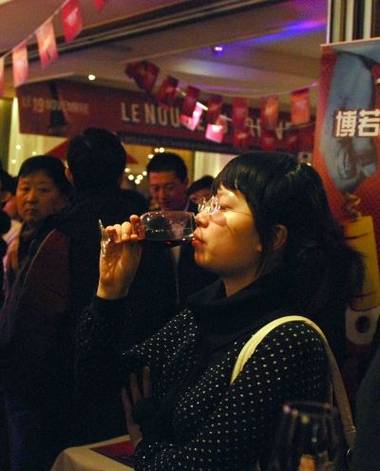
The remainder of the night is filled with raised and lowered glasses, bottles of what I am now sure are fake spirits and old war stories. But what’s not lost on me is the implication of Jiang’s words.
