The End of an Era – China Buying Out French Vintners(2)


When the meal had started, the discussion turned to Chinese buying up vintners in France. The idea, they agreed, was bad for the industry. I was shocked to hear such a thing from a country that prides themselves on most tasks they undertake, but Jiang had a different view.
He explained that in purchasing legitimate vintners, land and wine making capabilities, the Chinese could double or triple the profits of a normal French winery by nefarious means.
“The key is to mix in the fake wine with the good, the good grapes with the bad and merely sell the label.” he had said.
I challenged him saying that a wine connoisseur would not be fooled and he laughed.
“Of course not, but we Chinese are not connoisseurs. Look over there,” and sure enough at the table to our right, a group of men had mixed three different bottles of red and white wines with a juice of some sort and were consuming a punch that had to be worth several thousand US dollars.
“You see?” he grinned. “This is China. We have many many poor but we also have rich. To the rich, its not the taste nor quality, its the face. Those bottles there are worth over ten thousand kuai. But all mixed together like that, it might as well be tap water.”
It made sense to me. “So the good wine goes to France and…”
“The bad wine comes here. No not all of it, but a good part of it. Pretty soon the shelves will be overflowing with bottles from the best french wineries.”
I stared.
“Its already happening with clothing. The Chinese have set up manufacturing plants in Italy. They staff them with Chinese. They use Chinese cloth and know-how but label it as Italian made products. Chinese goods still have esteem in some parts of the world.”
The Numbers Don’t Add Up
The conversation was telling. The Chinese have bought up over 16 vintners across France, with plans of not only selling the wine, but creating ‘China oriented’ tourist destinations.
The idea is to create a mini China within France and then sell the experience to affluent Chinese tourists.
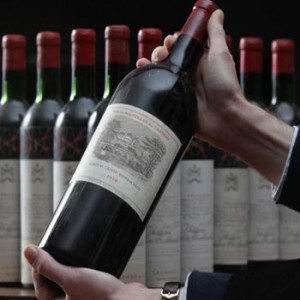
The major concern is that off knock off wines will flood the market. And this fear is well placed. Consider, for instance, the fact that Zhejiang, China sold 300,000 bottles of Chateau Lafite Rothschild last year, and on top of that a 5 star hotel in Dongguan sold another 40,000 (1) bottles of the wine.
This is interesting, insofar as the original French vineyard merely allocates 50,000 bottles for all of China (2). To make matters worse, the Chateau Lafite Rothschild only produces 200,000 bottles per year (3)!
This means that even if Zhejiang and Dongguan were the only places in the world to buy Chateau Lafite Rothschild, their consumption total was almost twice as much as actual production.
To make matters worse, a Chinese merchant has retrofitted a factory ship into a wine bottling plant. While at sea, they use wine made from lower quality Chinese grapes and then pour it into recycled Chateau Lafite bottles (4).
The ship then returns to China filled with the ‘finest in French wines’.
The result is that each year China sells more than 3,000,000 bottles of Chateau Lafite Rothschild. An astounding 80-90% of all the wine sold in China is fake (5).
When a bottle of it goes for U$7800, it’s no wonder the Chinese are looking to explore that market. As a matter of fact, such rampant piracy, along with China’s lack of proper care for wines (6), has made investing in a fine bottle a losing proposition (7).
While there is no way of knowing if these pirated wines will end up on American shores, one thing is certain – China is entirely changing the face of the wine business, one bottle at a time.
